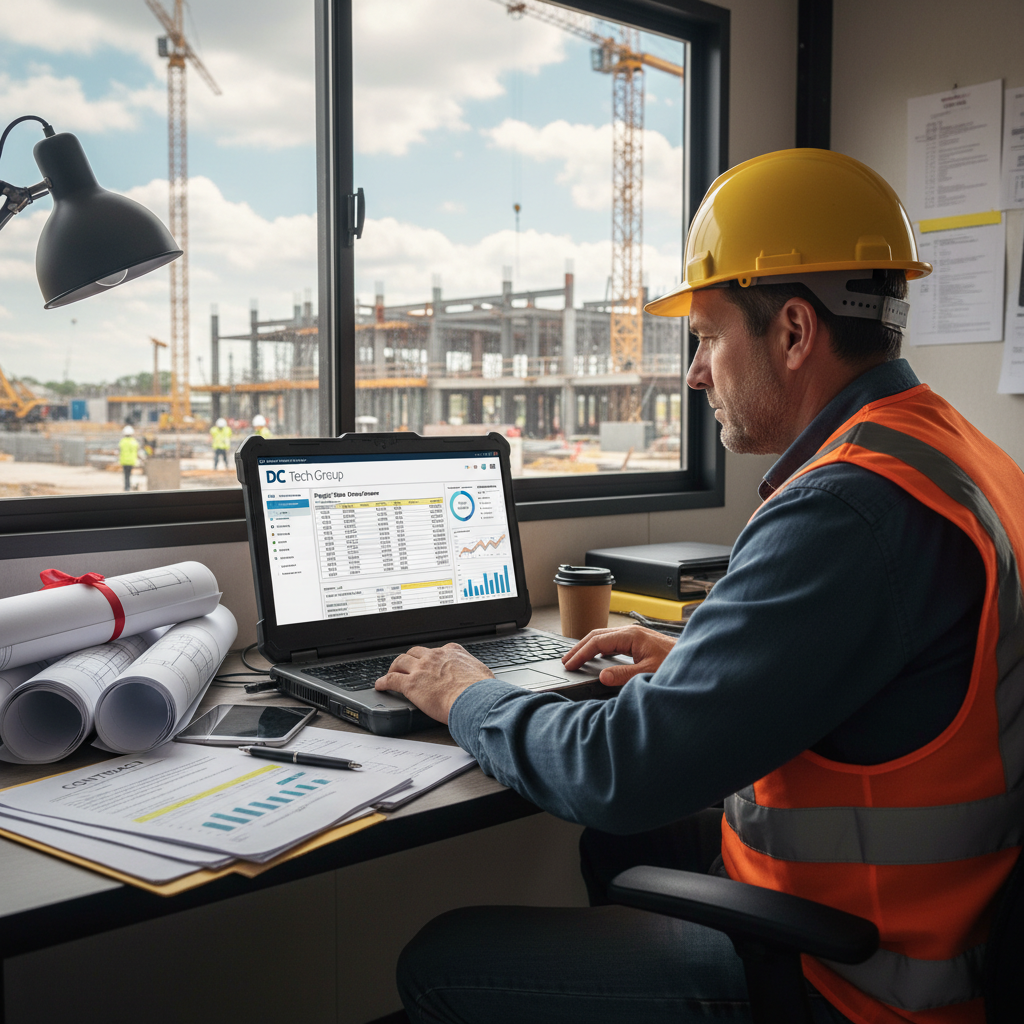
The last five percent of a construction project can feel like the hardest fifty. Punch lists pile up, subcontractors are scattered across other jobs, and the final invoice sits on hold while your team chases down incomplete items one by one. For commercial contractors and field service providers, slow project closeout is not just frustrating. It directly delays cash flow and ties up resources that should be moving on to the next job. Construction ERP software, particularly Acumatica Cloud ERP, is changing how contractors handle this critical phase by centralizing punch list management inside the same platform that runs the rest of the project.
Why Punch List Management Breaks Down on Most Jobsites
Punch lists fail because they are built on fragmented communication. A superintendent marks up a paper list, a project manager transcribes it into a spreadsheet, a subcontractor gets a text message, and no one has a shared view of what is actually done. By the time the owner walks the site, half the corrections are disputed and the other half were never assigned in the first place.
The Cost of Siloed Project Data
The core problem is that punch list items live outside the project management system. They exist in photos on someone's phone, notes in email threads, and handwritten lists that get lost between site visits. When your project data is siloed, with scheduling in one tool, job costing in another, and communication in email, there is no single source of truth to close out against.
Contractors managing projects this way routinely run into the same pattern of closeout problems:
- Delayed final payments because billing cannot start until every item is verified across disconnected tools.
- Rework costs that eat into margins when items are missed, duplicated, or assigned to the wrong trade.
- Owner disputes that drag on for weeks after substantial completion due to missing documentation.
- Retainage stuck in limbo while operations and accounting reconcile their separate versions of the punch list.
According to the Construction Industry Institute, rework on commercial projects accounts for roughly five to fifteen percent of total project costs, a figure that erodes margins precisely because closeout coordination breaks down.
The Same Lag Hits Field Service Teams
Field service providers face a similar version of this problem. A technician closes a work order in the field, but the back office does not know the job is complete until paperwork arrives days later. Billing stalls, customer satisfaction drops, and the next dispatch is already waiting. Without integrated field service management software, closeout is always a lag rather than a live process. DC Tech Group's work with field service companies shows how purpose-built ERP tools can eliminate that lag.
What Construction ERP Does Differently
A construction ERP platform connects punch list management to the rest of your project data. Job costs, subcontractor contracts, scheduling, and billing all live in one place, so closeout is a coordinated process rather than a scramble. Instead of maintaining a separate list, project managers work from a single digital record that every stakeholder can access in real time.
One Platform, Every Stakeholder
Acumatica Cloud ERP is built specifically for this kind of integration. Its construction module connects project management, accounting, and field operations in one cloud-based platform, which means a punch list item created on-site automatically ties to the responsible subcontractor, the relevant contract line, and the project schedule. When an item is marked complete and verified, that status is immediately visible to the project manager and the accounting team, so the billing cycle does not have to wait for a phone call or a walk-through. If you want to understand how DC Tech Group approaches Acumatica implementations for contractors, getting in touch with the team is the right starting point.
This kind of visibility matters because project closeout is fundamentally a coordination problem. The faster your team can assign, track, verify, and bill against completed items, the faster the owner can sign off and the faster you get paid. Acumatica's role-based access also means subcontractors and owners can see only the information relevant to them, reducing back-and-forth and speeding up approvals.
Key Features That Accelerate Project Closeout
Not all contractor management software handles closeout equally. When evaluating a construction ERP platform for punch list workflows, these are the capabilities that make a measurable difference.
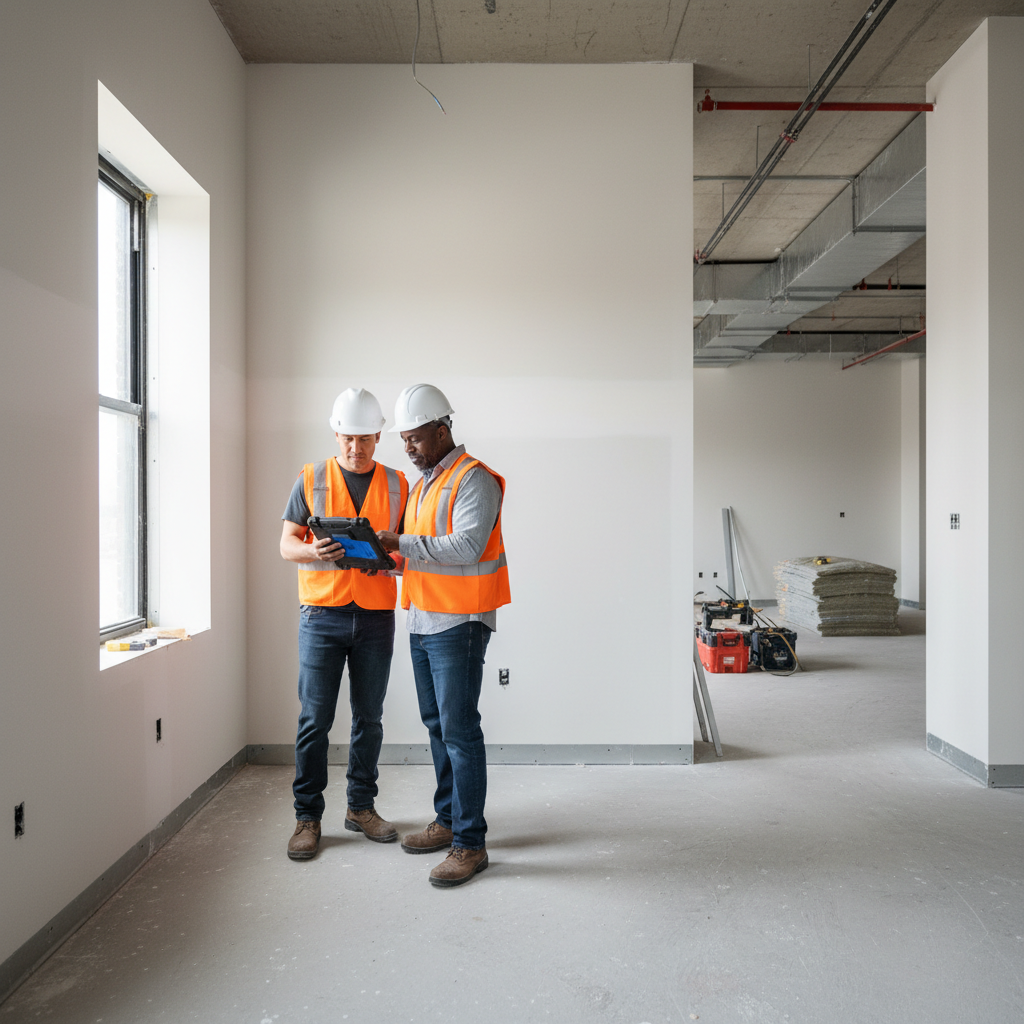
- Mobile punch list creation: Field supervisors can log items, attach photos, and assign responsibility directly from a phone or tablet on-site, without waiting to return to the office.
- Subcontractor notifications and tracking: Automated alerts go to the responsible party the moment an item is assigned, and completion status updates in the system when the work is done.
- Integration with construction scheduling software: Open punch list items can be linked to the project schedule so delays are visible before they affect the critical path.
- Connection to construction accounting software: Once all items tied to a contract are closed, the system can trigger or flag the final billing step, reducing the gap between completion and invoice.
- Owner and inspector access: Controlled visibility lets owners review and approve closeout items directly in the platform, cutting the time between punch list submission and final sign-off.
- Document management: Warranties, as-built drawings, O&M manuals, and lien waivers are stored in the same project record so closeout packages are assembled quickly and completely.
How CRM for Construction Supports Faster Closeout
Punch list management is also a client relationship issue. Owners who feel left in the dark during closeout are more likely to raise disputes, withhold retainage, or delay final payment. A CRM integrated into your construction ERP keeps communication organized and documented throughout the project, so there are no surprises at closeout.
Structured Communication Reduces Disputes
Acumatica includes CRM for construction that connects customer communication directly to the project record. When the owner raises a concern during the punch list phase, that note is attached to the project. It is not buried in someone's inbox. The project manager can respond with full context, and the resolution is documented for both parties. This kind of structured communication reduces the disputes and miscommunications that commonly drag out closeout by weeks. DC Tech Group configures these CRM workflows as part of a broader Acumatica implementation tailored to how your business actually operates.
A Strong Finish Wins Repeat Work
For contractors who work on repeat projects with the same clients, a well-managed closeout also feeds into future business. When an owner's experience at the end of a project is smooth and professional, the likelihood of being shortlisted for the next project increases significantly. The final impression a contractor leaves is often the one that matters most for long-term growth.

From Punch List to Final Payment
The path from an open punch list to a cleared final payment has several steps, and each handoff is a potential delay. In most contracting businesses, those steps happen across different tools, different people, and different timelines.
- Items assigned and completed by the responsible subcontractor or crew.
- Project manager verification that the work meets specification.
- Owner approval of the closed items and any remaining conditions.
- Retainage release tied to the contract and final documentation.
- Final invoice payment once all closeout requirements are cleared.
Compressing the Handoffs
When those steps happen inside one platform, the delays compress. Your accounting team sees punch list status without waiting for a call from the field. Your project manager does not have to manually update a spreadsheet before the billing department can act. Retainage tracking is built into the same contract record as the punch list, so nothing falls through the gap between operations and finance. For contractors still relying on disconnected tools, reading about how integrated ERP changes day-to-day construction operations is a practical first step before any software evaluation.
DC Tech Group works with contractors to implement and configure Acumatica ERP so that these workflows fit the way your business actually operates, not a generic template. The implementation process includes mapping your current closeout process, identifying where delays typically occur, and configuring the system to close those gaps. If you want to understand how your current setup compares to what an integrated ERP would look like in practice, the DC Tech Group team is a straightforward resource to start with.
Is Your Business Ready for Construction ERP
If your team is managing punch lists in spreadsheets or on paper, the friction you feel at closeout is not a process problem. It is a tools problem. Contractors who have moved to a construction ERP platform consistently report faster closeout cycles, fewer retainage disputes, and better visibility into where projects stand at any given moment. The technology is not new, but the adoption rate in mid-sized contracting businesses still lags, which means there is a real competitive advantage for firms that make the move before their competitors do.
Why Acumatica Fits Growing Contractors
Acumatica Cloud ERP is particularly well suited for growing contractors because it scales without requiring a full IT department to manage it. As a cloud-based platform, it is accessible from the field and the office with the same data, and it integrates with the tools most contractors already use. Whether you are a commercial general contractor, a residential builder, or a field service provider, the core challenge of coordinating closeout work is the same, and the solution works the same way. Acumatica's construction industry resources offer additional context on how the platform is designed for these workflows.
Start by Auditing Your Closeout Bottleneck
If you are evaluating options, it helps to start by auditing where your current closeout process breaks down. Is it subcontractor communication? Owner approvals? The gap between field completion and billing? Identifying the specific friction point makes it much easier to evaluate whether a given platform addresses your actual problem rather than just adding another tool to the stack. DC Tech Group specializes in exactly that kind of assessment. Reach out to start a conversation about what the right configuration looks like for your business.
Ready to close out projects faster and get paid sooner? DC Tech Group helps construction and field service companies implement Acumatica ERP so your punch list, scheduling, and billing workflows all work together.